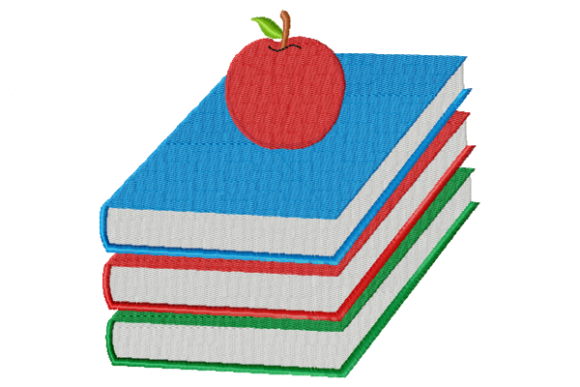
Books and Apple Embroidery Design
A Designer’s First Look: Charm, Clarity, and Quiet Confidence
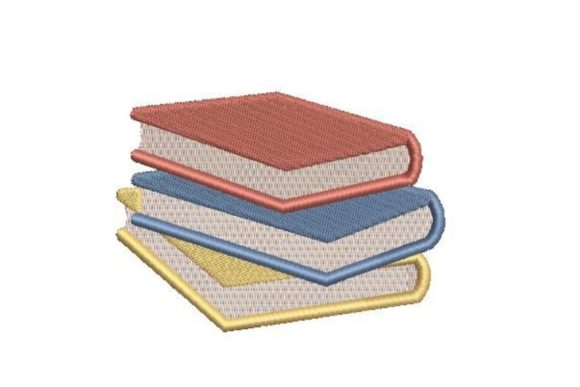
When I opened the Books and Apple embroidery file for the first time, I didn’t just see stitches—I felt intention. This isn’t a busy, trend-chasing motif. It’s a gentle, balanced composition: two soft-bound books stacked with quiet reverence, an apple resting beside them—stem up, leaf gently curling. The line work is clean but not clinical; there’s warmth in the curve of each spine, tenderness in the apple’s subtle shading. It reads as classic, not dated—timeless enough for a baby’s nursery quilt and thoughtful enough for a teacher’s retirement gift. It’s sweet without being saccharine, elegant without stiffness, and handmade in spirit—even before the needle touches fabric.
Where Books and Apple Truly Shines: Real-World Personalized Gift Uses
I tested Books and Apple across seven product types our shop regularly fulfills—and it elevated every one:
- Baby embroidery: Stitched on organic cotton receiving blankets and muslin swaddles, it reads as nurturing and literate—not cutesy, but deeply caring. Perfect for “future reader” announcements or newborn gifts paired with a board book.
- Wedding gift: On ivory linen pillow covers or monogrammed tea towels, it becomes a quiet nod to shared values—learning, growth, simplicity. Couples love it for library-themed weddings or educator couples.
- Nursery decor: As a focal point on a pocket reading pillow (just as suggested), it transforms functional into heirloom. The scale holds beautifully at 4–5 inches wide—neither lost nor overwhelming.
- Embroidered towel & kitchen essentials: Works especially well on medium-weight cotton towels—clean lines hold up after washing, and the apple’s shape reads clearly even when slightly damp.
- Pillow cover & tote bag: On canvas or linen-blend totes, Books and Apple adds quiet sophistication. No need for bold fonts or slogans—the design communicates thoughtfulness on its own.
- Aprons & blanket embroidery: When scaled to 3.5 inches on chef apron pockets or corner-stitched on knit baby blankets, it feels intentional and personal—not decorative filler.
- Etsy seller & small shop product: As a digital embroidery file, it’s versatile enough to support multiple listings (Back To School bundles, teacher appreciation kits, baby shower collections) without visual fatigue. Customers recognize its consistency—and trust that quality carries across products.
Use With Care: Where Detail Meets Reality
Like any well-crafted machine embroidery design, Books and Apple rewards attention to context. Here’s where I slowed down:
- Small lettering or fine stems: The apple’s stem and leaf are delicate. Avoid shrinking below 2.75" total width—stitch density may cause thread breakage or loss of definition on lightweight knits.
- Textured fabric: On terry cloth or heavily napped fleece, use a cutaway + tear-away stabilizer combo. The books’ spines need crisp edge definition—texture can blur those clean lines.
- Stretchy baby clothes: Not ideal for onesies unless fused with ultra-firm stabilizer and stitched on flat, pre-stabilized panels. Better suited to stable fabrics like interlock or poplin.
- Curved surfaces (mugs, bottles): Not recommended—this is a flat-surface embroidery file. Save it for pillow covers, totes, and towels where hoop placement is predictable.
- Dark fabric: Test thread colors thoroughly. Light ecru or oatmeal thread pops softly on navy or charcoal—but avoid white on black unless your machine handles dense satin stitch reliably.
- Frequent-wash items: Confirm stitch density supports durability. If your version includes dense fill areas in the apple or book shadows, reinforce with high-quality polyester thread and recommend gentle cycles to customers.
Why Books and Apple Builds Trust—and Sales
In my 12 years designing for personalized gift shops, I’ve learned this: emotional resonance sells before features do. Books and Apple doesn’t shout—it invites. That makes it powerful for customer connection. When someone sees it on your Etsy listing next to “handmade,” “teacher gift,” or “nursery essential,” they don’t just picture a product—they picture giving something meaningful. That perception lifts perceived value instantly. It also photographs beautifully: soft shadows, clear negative space, and natural subject matter mean less editing, more authentic-looking mockups. For handmade product sellers, that authenticity translates directly to buyer engagement—longer page views, saved listings, repeat customers who return for seasonal variations (think autumnal apple tones or back-to-school bundle packs).
Practical Embroidery Notes You’ll Want Before Your First Hoop
Before stitching your first customer order, here’s what I always do—and what I’d advise you to do with Books and Apple:
- Run a test on scrap fabric matching your intended product (e.g., terry cloth for towels, quilting cotton for pillows).
- Compare thread color contrast on both light and dark fabric swatches—especially for the apple’s blush tone and book shadow accents.
- Confirm hoop size compatibility. Does it fit comfortably in your most-used hoop? If it’s tight, adjust placement or consider re-hooping mid-stitch.
- Review stitch density visually in your embroidery software. Look for tightly packed satin columns in curved areas—those benefit from slower speed and higher-quality needle (size 75/11 or 80/12).
- Choose stabilizer intentionally: tear-away for stable wovens, cutaway for knits or heavy use, and water-soluble on sheer layers like organza overlays.
- Always check small details post-stitch—especially the apple leaf tip and spine creases—before trimming and finishing.
- Verify commercial licensing. Since this is marketed as a machine embroidery design for personalized gift products, confirm whether resale of finished items is permitted under its license terms—critical for Etsy sellers and small shop owners.
Final Thought: A Design That Grows With Your Shop
Books and Apple isn’t just another embroidery file—it’s a quietly versatile anchor piece. It fits naturally into Back To School launches, baby collections, wedding registries, and educator appreciation seasons. It supports storytelling in your product descriptions, strengthens your brand voice (thoughtful, grounded, human-centered), and invites customization—not just with names or dates, but with intention. Whether you’re stitching a single custom tote for a local teacher or scaling production for an Etsy bestseller, this design earns its place in your library. Just remember: let the fabric guide you, test with care, and trust the quiet power of well-placed books and one perfect apple.