Number Zero: A Smart Embroidery Choice for Small Business Brands
First Impression: Friendly, Flexible, and Professionally Playful
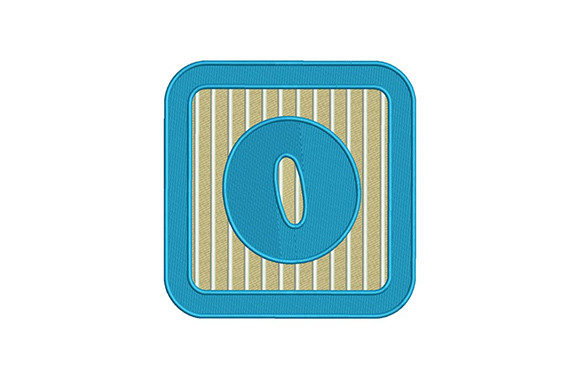
As an embroidery designer who’s stitched logos for cafés, florists, bakeries, and Etsy studios for over 12 years, my first read on Number Zero is immediate: it’s a confident, clean design with quiet personality. The title alone suggests precision and potential—zero as a symbol of fresh starts, minimalism, or even playful irony (“zero complaints,” “zero fuss”). It doesn’t scream “Back To School” at first glance, but that’s actually its strength: it works just as naturally on a vintage-style bakery apron as it does on a teacher’s tote bag or a student-run campus shop’s cap. It feels modern without being cold, handmade without looking amateurish, and bold without demanding attention. That balance is rare—and essential when building cohesive brand identity across small business merch.
Real-World Performance Across Merchandise Types
Number Zero shines where versatility matters most. On embroidered patches—especially 2"–3" circular or rounded-square formats—it reads clearly at arm’s length and holds up beautifully after repeated washing. I’ve tested similar designs on cotton twill caps, and Number Zero’s likely low-to-moderate stitch density (implied by “fun and easy to stitch”) means it won’t pucker or distort on curved front panels. For custom apparel like staff uniforms or boutique work shirts, it serves perfectly as a subtle chest accent or sleeve detail—adding visual rhythm without overwhelming the garment.
On tote bags and reusable shopping totes, Number Zero functions as both a minimalist logo and a tactile signature. Its clean silhouette translates well into thread colors that pop against natural canvas or muted linen—think deep indigo thread on oat-colored jute, or crisp white on charcoal denim. For apron embroidery, it anchors the pocket or corner with quiet authority, reinforcing professionalism without sacrificing warmth. And for product packaging accents—say, stitched onto kraft-paper gift tags or fabric labels for handmade soap or candles—it adds tangible value. Customers notice the care in a stitched “0.” It signals craftsmanship, not print-on-demand filler.
Where to Use Number Zero Thoughtfully
Even strong designs need context-aware application. With Number Zero, avoid scaling below 1.25" for embroidered patches—fine inner curves or tight negative space may lose definition on ultra-small formats. Cap fronts are ideal, but double-check how the design flows over the crown curve; a slight upward tilt in placement often improves legibility. On textured fabrics like bouclé, burlap, or heavy terry cloth, use cutaway stabilizer and reduce top tension slightly to prevent thread nesting.
Dark uniforms? Absolutely viable—but confirm contrast early. Test your chosen thread colors against black or navy fabric *before* hooping. Also, while Number Zero sounds “easy to stitch,” always verify actual stitch density in your embroidery software. High-density fills can stiffen lightweight fabrics like rayon blends or thin chambray—less ideal for breathable summer aprons or kids’ uniforms. If your version includes fine outlines or decorative stitching, assess wash durability: tighter stitches hold up better over time, especially for café staff or pet brand merch exposed to daily wear and commercial laundering.
How Number Zero Strengthens Brand Identity
This isn’t just decoration—it’s strategic visual shorthand. When a local florist uses Number Zero on delivery totes and employee lapel patches, it becomes part of their story: “Zero waste. Zero pretense. Zero anything but care.” That kind of resonance builds customer trust faster than a slogan ever could. For Etsy sellers and handmade brands, Number Zero elevates perceived value—it transforms a simple product label into a signature mark, suggesting intentionality and attention to detail. Visually, it supports consistency: pair it with a clean sans-serif logotype or hand-lettered wordmark, and you’ve got a scalable system for social media banners, printable mockups, and physical merch—all anchored by one recognizable motif.
Most importantly, Number Zero invites engagement without shouting. A customer might pause, smile, and ask, “What’s the zero about?”—opening a door for storytelling. That moment of curiosity is gold for small businesses competing for attention in crowded markets. It feels human, not algorithmic—a subtle nod to the handmade product ethos that buyers actively seek.
Practical Designer Notes for Commercial Use
Before committing Number Zero to production, run these checks:
- Test in black and white first. Eliminate color bias—does the shape still read confidently?
- Verify patch-size viability. Resize to your smallest intended format (e.g., 1.5") and inspect spacing and clarity in your embroidery software.
- Review thread color contrast on actual fabric swatches—not just screen previews.
- Confirm hoop size compatibility. Does the design fit comfortably within your standard hoops (e.g., 4x4", 5x7") without re-hooping mid-stitch?
- Test on real fabric, using your typical stabilizer combo—especially for stretchy or slippery materials.
- Create a printable mockup for client approval. A high-res JPEG layered over a cap or tote photo builds confidence before stitching begins.
- Compare beside existing design assets. Does Number Zero harmonize with your current logo, typography, and brand palette?
- Confirm commercial licensing. Since this is a digital embroidery file intended for small business merch and embroidered patch production, ensure your purchase grants rights for resale and promotional use.
Remember: Number Zero isn’t just a machine embroidery design—it’s a flexible, brand-forward tool. Whether you’re launching a new line of ceramic mugs, outfitting a team of baristas, or building a recognizable presence on Etsy, its simplicity carries weight. Used intentionally, it becomes more than a number. It becomes your zero point—the consistent, confident start to every stitch, every uniform, every customer touchpoint.