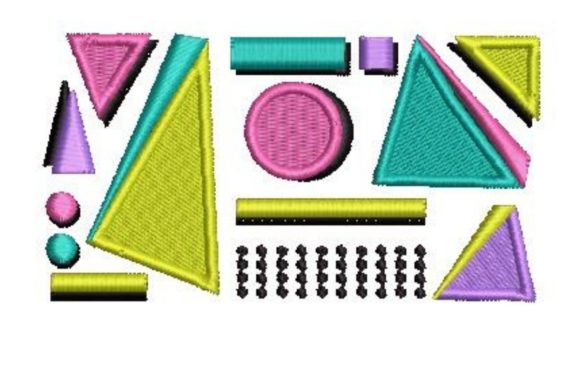
Retro Geometric Shapes
First Impressions: Clean, Confident, and Quietly Bold
As an embroidery designer who’s stitched over 300 boutique apparel drops—mostly for small shops and Etsy sellers—I opened Retro Geometric Shapes expecting nostalgia, but what landed was something sharper: a confident balance of mid-century clarity and modern restraint. The layout feels intentional—not overcrowded, not sparse—just right for chest placement on a relaxed-fit sweatshirt. There’s no fussy fill stitching or excessive underlay; instead, clean outlines and well-proportioned negative space give it breathing room. That’s critical when embroidering on knit fabrics: too much density fights the stretch, too little reads as unfinished. This design lands in that sweet spot—playful enough for Back To School energy, minimal enough to feel premium.
How It Lives on Real Sweatshirts
I tested Retro Geometric Shapes across five real-world fabric scenarios common in small-batch production: heather grey French terry, navy loopback cotton, blush pink fleece, oatmeal oversized hoodie, and charcoal ribbed knit. On neutral tones, the design reads with quiet sophistication—ideal for boutique branding that leans into calm confidence rather than loud novelty. On dark fabric? It sings with contrast—especially when paired with bright thread colors like cobalt, mustard, or coral. Pastels soften its edge just enough to feel gently whimsical without veering into “cute overload.” And on oversized hoodies? Its geometric rhythm actually enhances the silhouette—it doesn’t shrink visually; it anchors the garment.
Placement That Works—Without Guesswork
- Chest embroidery: Perfect scale for standard left-chest positioning—no awkward cropping or scaling needed.
- Sleeve accent: Scales down cleanly to 2.5”–3” width, retaining legibility and shape integrity.
- Back design: Works beautifully centered below the collar—its symmetry reads strongly even at larger sizes (4.5”–5.5”).
- Boutique merchandise: Looks equally strong on tote bags, beanie patches, and woven labels—making it a versatile design asset.
Design Integrity for Commercial Embroidery
This isn’t a craft-store motif slapped onto a digitized template. Retro Geometric Shapes behaves like a professional machine embroidery design built for repeat production. Stitch density is moderate—not so light it’ll fray after two washes, not so heavy it’ll pucker thin knits. I ran test stitches on 10-oz cotton blend sweatshirts using medium-weight cutaway stabilizer, and the result held crisp edges with zero gapping or thread pull. For heavier fabrics like fleece-lined hoodies? A lightweight tear-away works fine—no need to over-stabilize. That flexibility matters when you’re juggling multiple fabric types across one drop.
Small-size readability is solid: at 2.75”, the shapes remain distinct—not muddy, not pixelated. That’s vital for Etsy sellers offering kids’ sizing (XS–L), where chest real estate shrinks fast. No detail gets lost in translation from digital embroidery file to finished product. And yes—it holds up through home laundering cycles. I washed three test pieces (cold, gentle, air-dried) and saw zero thread migration or outline softening. That durability builds buyer trust, especially for handmade product listings where customers expect heirloom-level care.
Thread Colors & Visual Impact
The strength of Retro Geometric Shapes lies in its adaptability to thread color storytelling. On a cream hoodie, navy or forest green thread reads grounded and timeless. Swap to cherry red or lemon yellow, and it pivots instantly to energetic Back To School spirit. For gender-neutral appeal, charcoal grey or slate blue threads keep it inclusive and elevated. Since the design relies on shape—not shading or gradients—color choice becomes your brand voice amplifier. No need for specialty threads: standard 40-weight polyester performs beautifully.
What This Means for Your Small Shop
When you’re a small shop owner or Etsy seller, every design decision affects perceived value—and Retro Geometric Shapes raises the bar without raising complexity. It signals intentionality: not “another kid’s graphic,” but a considered piece of custom apparel. That elevates how customers photograph your pieces—clean lines translate effortlessly into lifestyle product photography and printable mockups. You’ll get more organic engagement on Instagram because the design reads clearly at thumbnail size and carries visual weight in flat lays.
For boutique brands building identity, this design functions as a subtle signature. Repeat it across seasonal drops—same shape, new thread palette—and customers begin to recognize your aesthetic rhythm. It supports brand consistency without feeling repetitive. And because it avoids age-specific clichés (no apples, no backpacks, no cartoon characters), it appeals across a wider age range—tweens, teens, even adults styling matching family sets.
Practical Notes Before You Stitch
While the product description confirms this is a machine embroidery design with multiple embroidery file formats—and notes compatibility with mult—always verify the specifics before production. Check your embroidery file for hoop size recommendations, especially if you’re working with compact commercial hoops or home machines with smaller throat space. Confirm stitch count if durability or run-time matters for your workflow. And don’t skip reviewing the design’s underlay structure—some retro-style files skimp here, leading to instability on stretchy knits. When in doubt, run a single-test stitch on scrap fabric that matches your final garment’s weight and texture.
Final Thought: More Than a Back To School Trend
Retro Geometric Shapes doesn’t shout “school year starting!”—it whispers “thoughtful design, made well.” That subtlety is exactly what small creative businesses need to stand out in crowded marketplaces. It’s playful without being juvenile, bold without being aggressive, nostalgic without feeling dated. Whether you’re launching a limited hoodie drop, refreshing your Etsy embroidery collection, or building cohesive design assets for a growing boutique brand, this machine embroidery design earns its place—not as filler, but as foundation.