Ripped Piece of Paper
First Impressions: A Delightfully Imperfect Charm
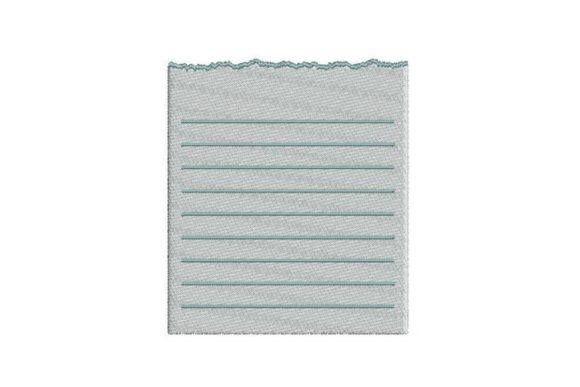
As an embroidery designer who’s stitched thousands of personalized gifts—from baby blankets to wedding keepsakes—I opened Ripped Piece of Paper expecting whimsy. What I found was something warmer: a quiet, handmade confidence. The design captures the organic asymmetry of a torn sheet—soft frayed edges, gentle curves, and subtle texture built right into the stitch work. It doesn’t shout; it invites. It feels modern but not cold, playful but not childish, elegant but never stiff. That balance is rare—and exactly why this machine embroidery design stands out in a crowded Back To School or handmade gift market.
Where Ripped Piece of Paper Truly Shines
This isn’t just another script font or generic motif. Ripped Piece of Paper works beautifully as a vessel for personalization—because the “ripped” shape naturally frames names, dates, short quotes, or even tiny icons (a onesie, a tiny heart, a pencil sketch). Here’s how it breathes life into real products:
- Baby embroidery: Stitched on a muslin swaddle or organic cotton blanket, it holds a newborn’s name with tenderness—not cutesy overload, but quiet significance.
- Wedding gift: On linen pillow covers or heirloom handkerchiefs, it grounds monograms or wedding dates in tactile authenticity—no glossy vector feel, just soft, human-made charm.
- Embroidered towel: Works especially well on high-quality flour sack or waffle weave towels—where the rip’s irregular edge echoes the fabric’s natural texture.
- Pillow cover & tote bag: Its open composition leaves room for clean, readable text without crowding. Perfect for Etsy sellers offering custom home + lifestyle bundles.
- Nursery decor & aprons: Paired with minimalist fonts or small botanical accents, it adds character without clutter—ideal for gender-neutral or Scandinavian-inspired collections.
- Custom order previews: Because the shape reads so clearly in digital mockups, customers instantly “get” the handmade story—even before stitching begins.
Use With Care: Smart Placement Matters
Like any thoughtful embroidery file, Ripped Piece of Paper rewards intentionality. It’s not a one-size-fits-all stamp—it thrives where its subtlety can be appreciated. Avoid using it:
- On stretchy baby onesies—fraying details may blur under tension;
- At very small scales (<5 inches wide)—delicate inner frays risk losing definition;
- On thick terry cloth towels without extra stabilizer—the density may shift or pucker;
- Over curved surfaces like mugs or rounded tote handles—distortion can flatten the rip’s organic flow;
- On dark fabric without testing thread color contrast—light-colored threads may recede instead of pop;
- In high-wash-frequency items (like kitchen cloths) unless stitch density and thread quality are verified—fine details need durability.
Why It Elevates Your Personalized Gift Business
For Etsy sellers, small shop owners, and craft fair vendors, perceived value isn’t just about materials—it’s about emotional resonance. Ripped Piece of Paper delivers that quietly. Customers don’t just buy a monogrammed blanket—they buy a keepsake that *feels* intentionally made, not mass-produced. That builds trust. That encourages repeat orders. That makes your product photography sing: the texture catches light, the shape draws the eye, and the imperfection signals care.
It also supports storytelling in listings. Imagine your product description: *“Each blanket features our signature ‘Ripped Piece of Paper’ embroidery—designed to hold your child’s name like a cherished note passed between generations.”* That’s not marketing fluff. That’s what this design enables.
Practical Embroidery Notes You’ll Want to Follow
Before stitching your first customer order, treat Ripped Piece of Paper like a new collaborator—not just a digital embroidery file:
- Test on scrap fabric matching your final product (e.g., bamboo blend for baby blankets, linen for pillow covers).
- Check thread color contrast on both light and dark fabric—especially where inner frays meet background.
- Confirm hoop size compatibility—some versions of this design may require larger hoops for full fidelity.
- Review stitch density—if it’s dense, pair with medium-cutaway stabilizer for towels or blankets; if lighter, try tear-away for delicate linens.
- Compare light/dark fabric mockups side-by-side—you’ll spot clarity gaps before stitching begins.
- Inspect small details post-stitch: Are frayed tips crisp? Do corners sit flat? Adjust tension or stabilizer if needed.
- Verify commercial licensing before selling finished products—this is essential for Etsy sellers, wholesale partners, and baby product creators.
A Design That Fits Real Life—Not Just Software
Let’s be honest: many machine embroidery designs look perfect on screen but fall flat when stitched. Ripped Piece of Paper avoids that trap. Its strength lies in restraint—no over-digitized swirls, no forced symmetry, no pixel-perfect rigidity. It understands fabric moves, thread catches light differently, and people connect with honesty over polish.
Whether you’re designing a Back To School teacher gift (stitched on a canvas tote), a wedding guest book alternative (embroidered on archival cotton), or a milestone baby embroidery piece (on a 100% organic swaddle), this design adapts without losing its voice. It doesn’t dominate the product—it elevates it.
And for small business owners building a brand around handmade quality? That’s everything. Because when your customer runs their fingers over those softly defined edges and says, *“This feels like it was made just for us,”* you know the design—and your craftsmanship—did their job perfectly.