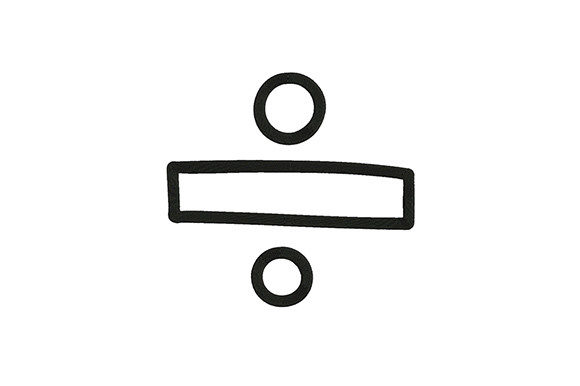
Divide Symbol: A Thoughtful Embroidery Design for Meaningful Gifts
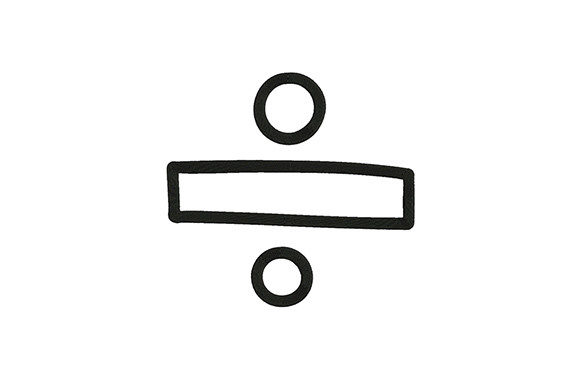
As an embroidery designer who’s developed hundreds of digital embroidery files for small shops, Etsy sellers, and custom gift studios, I approached Divide Symbol with quiet curiosity—not as a math lesson, but as a potential emotional anchor. This isn’t just another back-to-school motif. It’s a subtle, quietly confident design that invites interpretation: a symbol of balance, shared responsibility, or even gentle intellectual charm. Its first impression is soft, clean, and intentionally uncluttered—neither playful nor overly academic, but warmly human. It feels handmade without being rustic, elegant without stiffness, and classic enough to age gracefully on a baby blanket or wedding pillow cover.
The charm of Divide Symbol lies in its restraint. There’s no excessive fill stitching, no fragile flourishes—just clear line work and balanced proportions. That simplicity makes it unusually versatile across personalized gift categories. For baby embroidery, it adds quiet meaning to a receiving blanket or onesie—especially for parents who value thoughtful minimalism over clichéd animals or rainbows. As a wedding gift, it resonates with couples who appreciate symbolism over sentimentality: imagine it stitched in ivory thread on a linen pillow cover beside “&” or initials. On a kitchen towel? It becomes a quiet nod to shared meals and daily partnership. And yes—it works beautifully for back-to-school contexts too, not as flashcards, but as a subtle, confidence-building detail on a student’s tote bag or apron.
What makes Divide Symbol especially valuable for small shop owners and Etsy sellers is its strong giftability. Unlike trend-driven designs that fade after a season, this one carries quiet longevity. Customers notice it in product photos—not because it shouts, but because it *settles*. It elevates perceived value without raising production cost. When paired with quality fabric and thoughtful thread colors, it signals care, intention, and handmade authenticity. That builds trust: buyers don’t just see a machine embroidery design—they sense the thought behind the choice. And emotionally? It invites connection. A parent might choose it for their child’s first math class; a couple might select it for their shared cookbook collection; a teacher might stitch it onto a prize towel for a student who’s mastering division concepts. It’s adaptable, respectful, and quietly memorable.
That said, versatility doesn’t mean universality—and here’s where real-world testing matters. Divide Symbol performs best on stable, medium-weight fabrics: cotton-linen blends for pillow covers, tightly woven terrycloth for embroidered towels, midweight quilting cotton for blanket embroidery. Avoid using it on highly textured fabric (like bouclé or heavy terry loops) unless you reinforce with cutaway stabilizer—the clean lines can blur. Likewise, steer clear of stretchy baby clothes unless you use lightweight tear-away + topping; the symbol’s geometry needs stability to hold shape. Curved surfaces—think tote bag gussets or rounded pillow corners—require careful hooping and possibly repositioning to prevent distortion. And on dark fabric? Always test thread color contrast: a pale gold or heather gray may read softly on black, while white or ecru could pop beautifully—but only if your stitch density supports clarity.
For wedding gift designers and nursery item creators, pay special attention to scale. The design’s strength is its readability at modest sizes—ideal for 3"–4" placements on onesies or 5"–6" on pillow fronts. But shrinking it below 2" risks losing definition, especially in dense thread. Similarly, avoid placing it near high-friction zones (like towel hems or apron pockets) unless you’ve confirmed durability through wash testing. Frequent laundering will highlight any inconsistencies in stitch density or stabilizer choice—so always run a finished product through at least one gentle cycle before listing.
Practical embroidery notes are non-negotiable when preparing Divide Symbol for customer orders:
- Always test on scrap fabric—same type, same dye lot, same stabilizer—as your final product.
- Check thread color contrast across both light and dark fabric mockups; what reads well on screen may disappear under natural light.
- Confirm hoop size compatibility before digitizing adjustments—some versions may require re-hooping for larger layouts.
- Review stitch density: too sparse = fragile edges; too dense = stiff texture and thread breakage on towels or blankets.
- Match stabilizer to end use: cutaway for knits and towels, tear-away for quilting cotton, topping for textured surfaces.
- Compare digital mockups with stitched samples—a printable mockup helps clients visualize, but only real thread reveals how the design breathes on fabric.
- Verify commercial licensing before selling finished products—this is essential for Etsy sellers, baby product creators, and wholesale partners.
For craft fair vendors and handmade sellers, Divide Symbol shines as a customizable anchor piece. Pair it with monogrammed initials, a birth year, or a short phrase (“Shared Joy,” “Equal Parts,” “Our First Equation”) to create layered meaning. It also photographs exceptionally well—clean lines translate clearly in natural light, and its neutral tone pairs effortlessly with warm or cool palettes. That boosts buyer engagement: shoppers linger longer, imagine personal use, and connect with the story behind the stitch.
In short, Divide Symbol isn’t just a machine embroidery design—it’s a quiet collaborator in meaningful gifting. Whether you’re designing baby embroidery for a boutique, curating wedding gifts for a local studio, or building an Etsy shop around intentional handmade products, this embroidery file earns its place in your collection. It’s simple enough to stitch reliably, rich enough to resonate, and timeless enough to stay relevant across seasons, milestones, and generations. Just remember: its quiet power comes from precision, preparation, and purpose—not just placement.