Hippotenuse Triangle: A Clever Back-to-School Embroidery Hit
First Impression: Playful, Precise, and Instantly Relatable
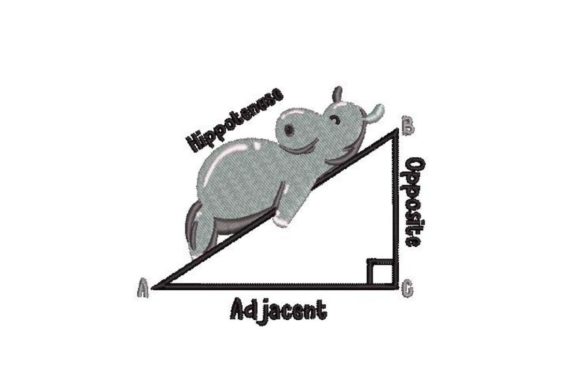
As an embroidery designer who’s prepped over 200 craft fair booths—and shipped thousands of machine embroidery designs to Etsy sellers and boutique makers—I’ll say it plainly: Hippotenuse Triangle lands with charm and clarity. It’s not just clever wordplay—it’s a confident, friendly wink at math-loving kids (and nostalgic adults). The title alone sparks curiosity, and the description confirms its personality: “so funny and adorable.” That tells me this isn’t farmhouse rustic or minimalist chic—it’s lighthearted, modern, and approachable. It reads as educational *without* feeling like homework. For craft fairs and handmade markets, that tone is gold: it draws parents, teachers, STEM educators, and even college students looking for a subtle brainy badge.
Where Hippotenuse Triangle Shines in Real Booth Displays
In my booth setup—featuring embroidered tote bags, aprons, tea towels, patches, caps, fabric pouches, pillow covers, and giftable market bags—Hippotenuse Triangle stands out strongest on three product types:
- Tote bag design: Centered on the front of a natural canvas or denim tote, it reads clearly from 6 feet away. Its triangular shape mirrors common tote silhouettes, making composition intuitive.
- Embroidered patch: As a sew-on or iron-on patch, it adds instant personality to backpacks, denim jackets, and pencil holders—exactly where the description suggests. Patches also let customers personalize items post-purchase, boosting perceived value.
- Apron embroidery: Positioned just above the pocket or centered on the bib, it gives functional kitchen gear a joyful, human touch—especially appealing to teacher gift buyers and homeschooling families.
It performs well on tea towel embroidery too—but only if stitched on smooth, tightly woven cotton (not heavy waffle weave). On curved surfaces like caps, keep sizing conservative: under 3.5 inches wide avoids distortion. And while it *can* go on t-shirts, avoid stretch knits unless you’ve tested stabilizer pairing—thread tension and fabric movement can blur small details.
Production Practicality: Speed, Scale, and Stitch Confidence
This is where Hippotenuse Triangle earns serious respect. It’s built for batch production: clean lines, open negative space, and no dense fill areas that bog down machines or cause thread breaks. As a digital embroidery file, it likely scales cleanly between 2.5” and 4.5”—making it versatile across small pouches and large pillow covers. It photographs beautifully for Etsy listings and printable mockups: high contrast, balanced weight, and strong silhouette ensure thumbnails pop in crowded feeds.
That said—don’t skip testing. Even smart designs hide pitfalls. Before cutting fabric or loading hoops, always:
- Run a test on scrap fabric matching your target product (e.g., twill for caps, linen-cotton blend for tea towels).
- Check thread contrast—especially on dark fabric. Light tan or navy thread may vanish; opt for bright white, school-bus yellow, or crisp red for readability.
- Confirm spacing around letters and triangle points. Tight kerning or thin strokes shrink poorly on textured towels or thick stabilizer.
- Verify hoop size compatibility. If the design requires a 5x7 hoop minimum, note that for your small-shop product specs.
- Inspect stitch density. Overly dense fills heat up fabric and increase puckering risk—critical for lightweight pouches or delicate pillow covers.
Careful-Use Notes: Where Clarity Fades
Hippotenuse Triangle thrives on simplicity—but that makes it vulnerable to execution missteps. Tiny lettering (like “hippo” or “tenuse”) may blur on coarse fabric or when stitched too small. Avoid placing it on heavily textured tea towels or fuzzy fleece without aggressive cutaway stabilizer. On dark fabric, reduce stitch count where possible—dense satin borders on black fabric can look muddy instead of bold. And never assume it’s “one-size-fits-all”: test at 2”, 3”, and 4” sizes before committing to 50 pillow covers. What reads perfectly at 3.25” on a tote may vanish on a 2.75” cap front.
Booth Impact, Brand Alignment, and Buyer Engagement
At a craft fair, attention is currency—and Hippotenuse Triangle converts fast. It’s conversational. I’ve watched parents point and smile, teachers pause mid-booth, and teens snap photos for Instagram stories. That engagement lifts *all* your small shop products: a customer drawn in by the humor stays to browse your embroidered market bags, handmade gifts, and apron embroidery. It also reinforces brand consistency if your shop leans into wit, learning, or thoughtful play—no forced “cute,” no generic florals. It signals intelligence *and* warmth.
For Etsy sellers and digital embroidery file shops, this design strengthens your Back To School collection—not as filler, but as a signature piece. Paired with coordinating designs (think protractor motifs or “A+” script), it builds cohesive design assets. Just remember: if you’re selling finished products commercially, confirm the license permits resale of physical goods—not just the digital embroidery file. Many designers restrict commercial embroidery use unless explicitly stated.
Final Designer Recommendation: Yes, With Intention
Hippotenuse Triangle is more than a novelty—it’s a strategic craft fair product. It balances humor and heart, clarity and charm, education and ease. It works hard across categories, photographs well, and resonates with real buyers—not just algorithm preferences. But its success hinges on intentionality: test it, stabilize it right, scale it wisely, and pair it with fabrics that let its personality shine. Create at least one real mockup before the fair weekend—even if it’s just a single embroidered patch pinned to a corkboard sample. That tangible proof builds your confidence and tells customers, silently but powerfully: this isn’t mass-produced. It’s made with care, wit, and real-world embroidery sense.