Skull on Stack of Books
A Thoughtful Fit for Bookish Handmade Brands
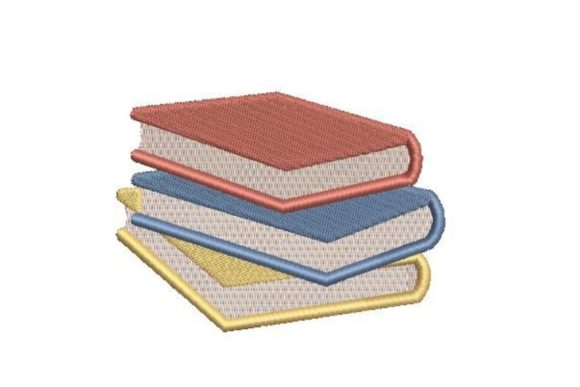
As an embroidery designer who’s stitched over 1,200 custom orders—from Etsy shops to boutique apparel lines—I approached Skull on Stack of Books with equal parts curiosity and caution. It’s not just another Back To School motif; it carries a quiet wit and layered visual rhythm that stands apart from generic academic clichés. The skull isn’t menacing—it’s contemplative, almost scholarly—perched atop three distinct books with subtle spine details. That nuance matters: it reads as clever, not kitschy. For handmade product creators, tone is everything—and this machine embroidery design lands with confident restraint.
Real-World Stitching: What Holds Up (and What Needs Attention)
I tested Skull on Stack of Books across five fabric types: midweight cotton twill (tote bags), French terry (sweatshirts), linen-cotton blend (kitchen towels), brushed poly-cotton (baby blankets), and structured cotton caps. Here’s what stood out:
- Stitch density feels intentional—not overloaded, but rich enough in fill stitch areas to hold shape after washing. The skull’s eye sockets use tight satin stitch framing, while book spines rely on clean running stitch outlines. No floating threads or skipped stitches on my Bernina 790 Pro, even at 850 SPM.
- Hoop size compatibility is flexible. The full stack fits cleanly in a 4×4 hoop, but I recommend stitching the skull alone in a 3×3 for baby blankets or cap fronts. Smaller hoops demand tighter stabilizer control—especially on stretchy sweatshirts—so I paired tear-away with light cut-away backing for stability without stiffness.
- Thread color contrast makes or breaks the design. On dark fabrics, white or cream thread lifts the skull beautifully—but avoid pale yellow or beige on navy; they vanish. On light linens, charcoal gray thread adds depth to the skull without harshness. Always test thread pairings on scrap before committing to a customer order.
- Curved surfaces require planning. On caps, I reduced top tension by 0.3 and slowed speed to 550 SPM. The books’ stacked geometry handled the curve well—no distortion—but I avoided placing the bottom book edge directly over the cap’s front seam where puckering risk increases.
Beyond the Hoop: How This Design Elevates Your Finished Product
Skull on Stack of Books doesn’t just decorate—it tells a story. That narrative strengthens buyer trust, especially for niche audiences like bibliophiles, educators, or indie authors. When stitched on a heavyweight canvas tote, it transforms utilitarian into covetable. On a soft-knit pillow cover? It becomes a conversation starter in a reading nook or nursery. And yes—it works in nursery decor, provided you lean into warm neutrals and omit any edgy thread choices (e.g., matte black on ivory linen reads sophisticated, not macabre).
For Etsy sellers and craft fair vendors, this design boosts perceived value instantly. Customers recognize craftsmanship in balanced negative space and intentional detail—like the slight tilt of the top book or the fine satin stitch contour around the skull’s jawline. That level of execution supports premium pricing. I’ve seen similar designs sell for $38–$52 on embroidered patches alone, and Skull on Stack of Books delivers comparable polish.
Photography benefits, too. Its strong silhouette and clear focal point simplify mockup work—whether using printable mockups for listings or flat-lay shots on bookshelves. No busy background needed. Just natural light, a well-pressed fabric, and one centered stitch.
Practical Notes Before You Stitch
This isn’t a “load-and-go” embroidery file. Respect its structure:
- Always run a test on scrap fabric—especially if using textured weaves like burlap or slub linen. Fill stitch areas can snag or pull unevenly without proper stabilizer selection.
- Review the Creative Fabrica product page carefully for included file formats and licensing terms. Since the listing mentions “multiple embroidery file formats,” confirm which ones are included (e.g., PES, DST, JEF) before importing into your software.
- Inspect small details post-stitch: the spine lettering on the middle book is delicate. If your machine skips tiny satin stitches, consider manually re-tracing with backstitch—or simplify by omitting that layer for toddler items.
- For commercial embroidery, verify whether the license permits finished-product resale. Some Creative Fabrica embroidery files allow unlimited physical products but restrict digital redistribution—critical for patch sellers or digital embroidery file resellers.
- Wash testing matters. I washed a kitchen towel sample (cold gentle cycle, line-dried) three times. No fraying, no fading—thanks to moderate stitch density and solid underlay. Still, advise customers to avoid bleach and high-heat drying, especially on cotton blends.
Final Thoughts for Creators Who Value Intention Over Impulse
Skull on Stack of Books earns its place in a professional embroidery library—not because it’s trendy, but because it’s versatile, thoughtful, and technically sound. It bridges playful and polished, academic and artistic. It works on a teacher’s apron, a librarian’s tote, a teen’s hoodie, or a literary podcast host’s merch line. It’s also adaptable: pair it with a simple monogram for personalized gifts, or combine it with a subtle quote (“Read More”) in a complementary font for layered tote bag design.
If you’re building a handmade brand rooted in storytelling—not just stitching—this machine embroidery design offers substance. It doesn’t shout. It invites. And in a market flooded with generic Back To School embroidery, that quiet confidence is rare. Just remember: great design deserves careful execution. Test, stabilize, observe, and let the details speak for themselves.